

Psalm 103:2: Bless the LORD, O my soul, and forget not all his benefits
Eight days before Thanksgiving, David teaches us to speak to our own souls and count God's benefits: forgiveness, healing, redemption and tender mercies.
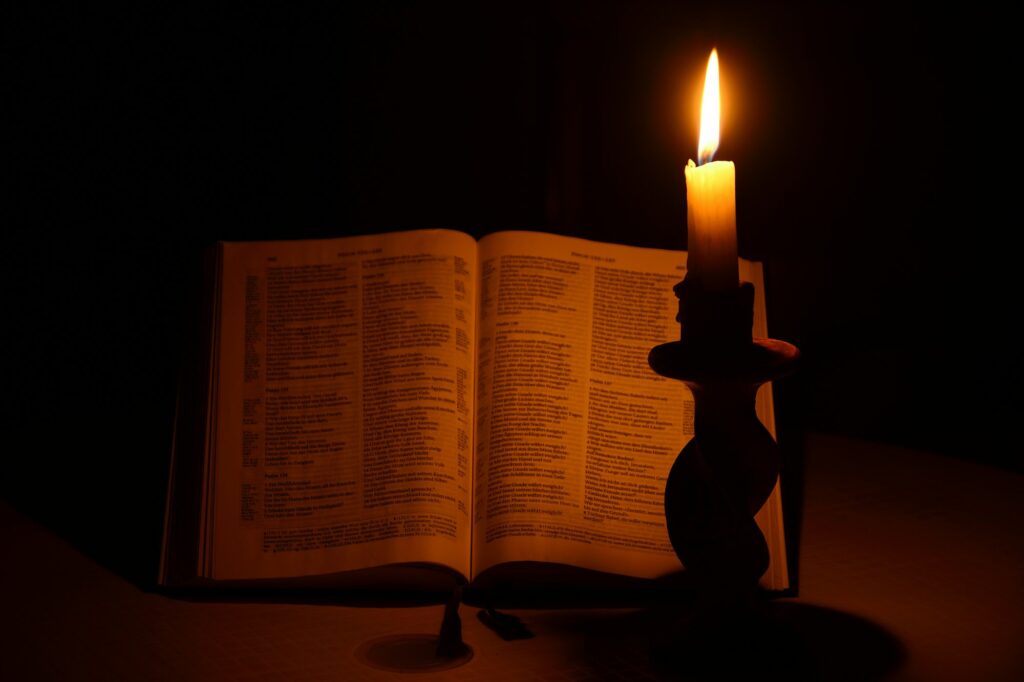
Photo: Ivan Sabayuki / Unsplash
Memory is a strange thing. We can recall every word of an insult from twenty years ago and forget the answered prayer from last spring. David knew this about the human heart, so in Psalm 103 he does something remarkable: he preaches to himself. “Bless the LORD, O my soul.” On this Wednesday, eight days before Thanksgiving, his song gives us a way to stir our own memories and count the benefits of God one by one.
The Word for Today
“Bless the LORD, O my soul, and forget not all his benefits.” (Psalm 103:2, KJV)
Advertisement
Psalm 103 opens with a double call: “Bless the LORD, O my soul: and all that is within me, bless his holy name.” Then verse 2 adds the warning not to forget. Verses 3 through 5 begin listing the benefits: He “forgiveth all thine iniquities,” “healeth all thy diseases,” “redeemeth thy life from destruction,” “crowneth thee with lovingkindness and tender mercies,” and “satisfieth thy mouth with good things.” The rest of the psalm widens out to God’s mercy on His people, His compassion like a father’s, and His steadfast love that lasts from everlasting to everlasting.
Going Deeper: Talking to Your Own Soul
Most of the psalms are addressed to God. This one begins with David addressing himself. He knows that his soul can grow sluggish, distracted or forgetful, so he gives it orders. That is a healthy spiritual practice. Instead of waiting to feel grateful, he commands his inner life to rise up and bless the Lord.
The word “forget” is important. In Scripture, forgetting God is rarely a matter of losing information. Israel did not forget that the Lord existed. They forgot to live as if His past faithfulness mattered. They let present worries crowd out past mercies. David knew that gratitude must be cultivated on purpose, or it will slip away.
Look carefully at the list of benefits. It starts with forgiveness. Before healing, before provision, before any of the outward blessings, David names the pardon of sin. That is the deepest gift God gives. A family can have a full table and still be far from God; but a soul that has been forgiven has a reason to rejoice even at an empty table.
Then the list moves outward: healing, redemption from destruction, lovingkindness, tender mercies, good things. Some of us can name times God healed our bodies. Some can name times He pulled us back from a path that would have destroyed us. All of us, if we stop to think, can name daily mercies we have taken for granted: breath, food, shelter, people who love us.
Verse 5 ends with a beautiful picture: “so that thy youth is renewed like the eagle’s.” Gratitude has a renewing effect. Remembering God’s benefits lifts the tired spirit and gives fresh strength for the road ahead.
Notice the word “all” in verse 2: “forget not all his benefits.” David is not satisfied with a vague sense that God has been good. He wants to recall the particulars. General gratitude fades quickly, but specific gratitude takes root. It is one thing to say, “God has blessed me.” It is another to say, “God kept my son safe on that icy road in February,” or “God provided the money for the furnace repair right when we needed it,” or “God gave me peace in the waiting room the night Mama had surgery.” Specifics turn thanksgiving from a slogan into a testimony.
Context: The Mercy That Outlasts Us
Later in the psalm, David reflects on how short human life is. “As for man, his days are as grass: as a flower of the field, so he flourisheth. For the wind passeth over it, and it is gone” (verses 15-16). But then comes the contrast: “But the mercy of the LORD is from everlasting to everlasting upon them that fear him, and his righteousness unto children’s children” (verse 17).
That is a promise for families. God’s mercy does not end with one generation. Grandparents who prayed for grandchildren, parents who brought their children to church week after week, saints who never saw the results of their faithfulness, all of them are part of a story of mercy that keeps going. When we remember God’s benefits, we are also remembering the people He used to carry His mercy to us.
For Kentucky Families and Churches
Here are practical ways to “forget not” in the week before Thanksgiving:
- Write a benefits list. Using verses 3-5 as headings, write down specific ways God has forgiven, healed, rescued, crowned and satisfied you or your family.
- Tell the family stories. At the Thanksgiving table, ask the oldest person present to share a time God was faithful to your family. Let the children hear it.
- Look at old photographs. Pull out pictures from past years and thank God for each season, including the hard ones He brought you through.
- Remember the saints. Many of our churches were built by people whose names are now on headstones in the church cemetery. Thank God for them, and consider sharing their stories with younger members.
- Preach to yourself. When you feel discouraged this week, say Psalm 103:1-2 aloud. Give your soul its marching orders.
- Turn memory into service. Since God satisfied your mouth with good things, consider sharing a meal or groceries with someone who will have a thin Thanksgiving.
When Memory Hurts
For some, looking back is painful. The holidays stir up memories of loved ones who have passed, broken relationships or past mistakes. Psalm 103 speaks to that too. Verse 12 says, “As far as the east is from the west, so far hath he removed our transgressions from us.” Verse 13 adds, “Like as a father pitieth his children, so the LORD pitieth them that fear him.” God’s memory of us is shaped by mercy. He remembers that we are dust (verse 14). He does not hold our sins over our heads. If your past haunts you, hear that good news. And if grief is heavy this season, lean on your church family and do not hesitate to talk with a pastor or counselor.
Looking Ahead
Psalm 103 ends where it began, but bigger. David calls on the angels, the heavenly hosts and all of God’s works in every place to bless the Lord, and then he comes back to himself one last time: “bless the LORD, O my soul.” Our gratitude is meant to join a much larger song. As Thanksgiving gives way to Advent in a few days, the church will begin to sing again of the angels who praised God over Bethlehem. Let this week of remembering prepare your heart to join that chorus. The God who has loaded your life with benefits is the same God who sent His Son.
Questions for Reflection
- Why do you think David spoke to his own soul instead of waiting to feel thankful?
- Which of the benefits in verses 3-5 have you experienced most clearly this year?
- Who in your family line or church history carried God’s mercy to you?
- What helps you remember God’s faithfulness when present problems feel large?
A Closing Prayer
Bless the Lord, O my soul, and all that is within me, bless His holy name. Lord, forgive us for how quickly we forget. Thank You for forgiving our iniquities, healing our diseases, redeeming our lives from destruction, and crowning us with lovingkindness and tender mercies. Thank You for satisfying us with good things and renewing our strength. Thank You for the faithful people who carried Your mercy to us, and help us carry it to our children’s children. In Jesus’ name. Amen.
Quick check
How much did you catch? Tap a question to see the answer.
1. What does David tell his soul not to forget in Psalm 103:2?
Answer: All of the Lord’s benefits.
2. What is the first benefit listed in Psalm 103:3?
Answer: He forgives all our iniquities.
3. According to verse 12, how far has God removed our transgressions?
Answer: As far as the east is from the west.